Results of a new study have highlighted gaps in Malawi’s constitutional and legal framework that empowers the President to appoint public officers.
The report has since said these gaps are threats to democracy, having entrenched political patronage and corruption in the nation’s governing architecture.
In the study titled ‘Political patronage as a form of political corruption and its implication for public service’ published in Malawi Journal of Politics and Public Affairs Volume 1 dated July 2026, University of Malawi (Unima) scholars Bernadette Malunga and Ngcimezile Mweso argue that unlimited presidential powers on appointments alongside opaque processes have turned public service top jobs into rewards.
Reads the paper in part: “Entrusting a political figure with enormous powers to appoint people to public office gives much room for abuse and entrenches political patronage.
“Political corruption perpetuated through nepotism and cronyism is about securing votes or rewarding supporters.”
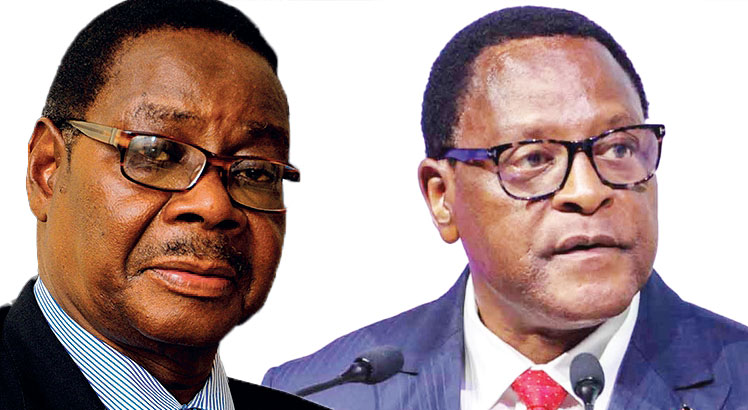
and Chakwera. | Nation
Section 89 of the 1994 Constitution gives the President of the Republic of Malawi powers to appoint Cabinet ministers, ambassadors, heads of statutory bodies and other senior public officers.
In some cases, the presidential appointments are subjected to parliamentary confirmation, which largely tends to be mere rubber stamping. Such positions include Ambassadors and High Commissioners, Inspector General of Police, Anti-Corruption Bureau (ACB) Director General and Attorney General.
The authors describe the arrangement as high-level corruption: misconduct at the apex of power, driven by “greed, the drive to remain in office, and the need to dispense favours among political allies… to keep them happy, cooperative and loyal”.
While the Public Service Act and Parliament’s Public Appointments Committee (PAC) provide oversight, the paper says they have not closed the gap, noting that hearings are often pro forma and there are no statutory competency tests for most appointees.
Stalled reforms
Between 2014 and 2019, during President Peter Mutharika’s first term, his administration attempted to reduce presidential discretion through amendments to the Public Service Act in 2014 and the National Public Service Management Policy in 2018 to shift hiring, discipline and promotion of principal secretaries (PSs) and directors from the Office of the President and Cabinet (OPC) to Public Service Commission (PSC).
The reforms introduced competitive advertising, interviews and fixed tenures for PSs, modelled on Botswana and Zambia arrangements.
However, implementation stalled. The regulations were never finalised while the PSC remained under-resourced and dependent on OPC for budgets.
Pattern across regimes
The paper notes that the practice cuts across successive administrations.
During President Lazarus Chakwera’s administration, the paper cites Tonse Alliance appointments, including that of Titus Mvalo, Senior Counsel (SC), a lead lawyer in the presidential election case as Minister of Justice, Vice-President Saulos Chilima’s lead counsel in the same case Chikosa Silungwe as Attorney General and Malawi Congress Party (MCP) operative Daud Suleman, who was a witness in the case, as Malawi Communications Regulatory Authority (Macra) director general.
Under Mutharika, the study references the 2022 Industrial Relations Court (IRC) award of K18 million to former PS Christopher Makileni for alleged political victimisation dating back to 2014. He had been posted to OPC and was left without a vehicle, forcing him to remain at home.
There is also a 2023 High Court of Malawi order for the Democratic Progressive Party (DPP) to refund K13.5 million donated by State entities during a 2017 fundraiser.
Underway reshuffles of the top brass in ministries, departments and agencies (MDAs) during Mutharika’s second term have also drawn civil society criticism over lack of transparency.
The cost
The developments are happening when Malawi can least afford inefficiency. Inflation rate is above 20 percent, the trade deficit stands at K1.7 trillion, economic growth is forecast at just 2.3 percent and public debt is projected at 92.3 percent of total output.
A 2023 World Bank review found wage bill inefficiencies and weak MDA capacity cost the fiscus billions annually, with analysts saying that has unlikely changed.
In its 2022 survey, Pan-African research outfit Afrobarometer found that 67 percent of Malawians believe “people with connections” get government jobs.
With youth unemployment at 12.6 percent as per National Statistical Office (NSO) 2023 data, the perception that jobs are distributed along party lines erodes trust, drives brain drain and fuels illegal migration to countries such as South Africa.
The regional context
In contrast, some of Malawi’s Southern African Development Community peers have moved faster to reform although challenges remain.
South Africa vets senior appointments in its Public Service Commission, with its constitution requiring appointments based on “ability, objectivity and fairness”. Post-State Capture, the Zondo Commission recommended an independent recruitment panel.
In Tanzania, the Public Service Recruitment Secretariat runs competitive recruitment for most civil service jobs while Zambia’s 2016 amendment strengthened the Civil Service Commission, reducing presidential control over PSs.
On the other hand, Botswana, top in Sadc on Transparency International’s Corruption Perception Index, uses the Directorate of Public Service Management to advertise and shortlist senior posts. Political appointees are limited to ministers and ambassadors.
The common thread in these regional examples is that countries that cut patronage moved technical appointments out of direct presidential control.
Governance commentator Undule Mwakasungula called for “stronger parliamentary scrutiny of ministerial nominees, clear competency standards, and stronger accountability mechanisms”.
Mzuzu University development politics expert Chrispin Mphande said patronage has created “two systems—career civil servants and those politically linked”.
“The danger is a disconnect that affects performance as the appointments are mostly transactional,” he said.
Unima lecturer in electoral and legislative politics Gift Sambo, in a separate interview, warned that “the client-patron logic undermines formal bureaucratic institutions… It is a strategy that party elites employ to cement their hold on power”.
Malunga and Mweso recommend limiting presidential powers, making competitive recruitment mandatory for senior posts and capacitating independent oversight bodies while protecting them from interference.